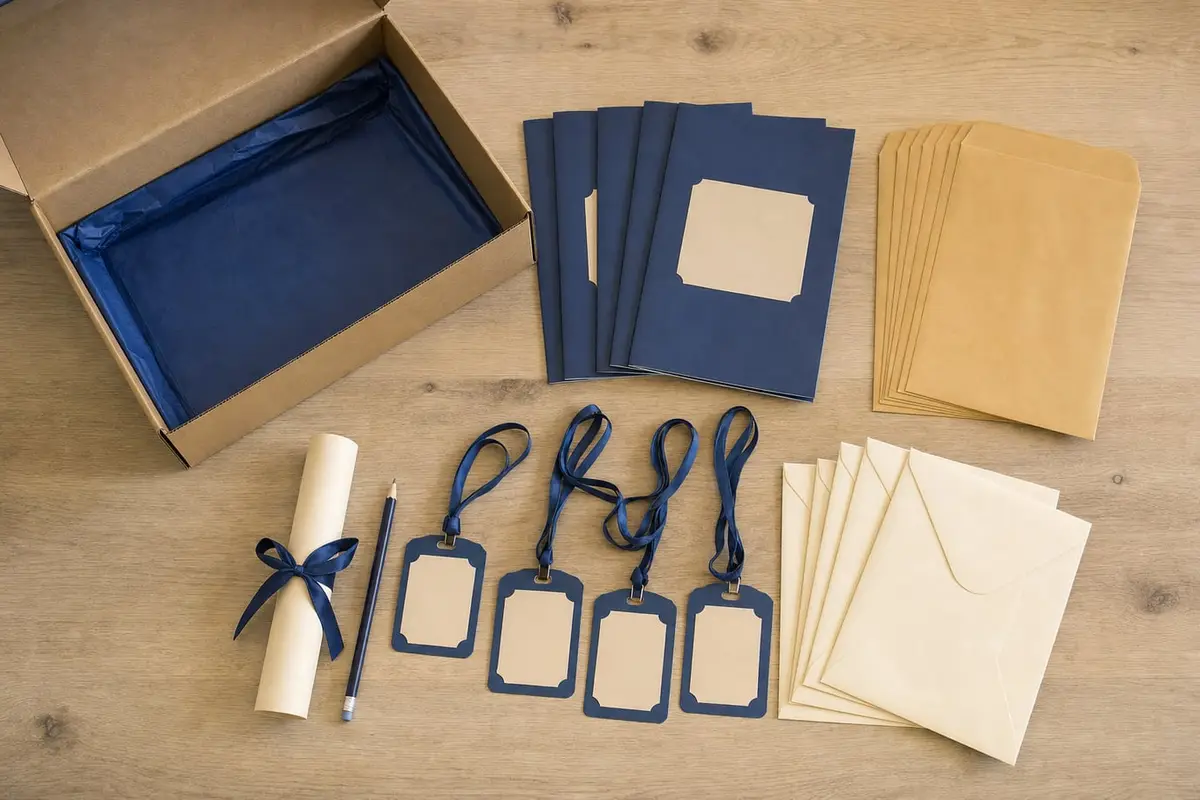
A murder mystery party kit holds character booklets, invitations, name tags, clues and a host guide for 5 to 20 guests. Choose one whose required roles match your guest count, such as University Games' Pasta, Passion & Pistols for six to eight adults or a 20-role Broadway Murder Mysteries kit for large groups, then check host role and prep time.
Required vs optional characters — In a murder mystery party kit, required characters carry clues the plot needs and must be cast, while optional characters add color and can be left out when fewer guests attend.
We earn a commission when you buy through links on this page, at no extra cost to you. Commissions never decide which games we pick or their order. As an Amazon Associate I earn from qualifying purchases. Affiliate disclosure
A murder mystery party kit casts your guests as suspects, hands them secrets and runs the evening in rounds of clues until someone names the killer. The numbers on the box decide whether it fits your night. University Games’ Pasta, Passion & Pistols is sold for eight adults but, according to its rules, needs only six suspects present, and the host keeps a role. Talking Tables’ 1920s theatre kit runs from five players including the host up to 12 guests, with three alternative endings. Broadway Murder Mysteries kits carry 20 scripted roles for 4 to 20 players, and Murderous Decisions games take any combination of 6 to 14 guests, choosing the murderer on the night. This guide goes through each choice in the order that matters, then ends with a decision grid. When you know what you need, our comparison of the best murder mystery party games shows which kits fit each profile.
Start with your exact guest count
Count your confirmed guests before you look at a single theme. Then read two numbers on the box: how many characters the story requires, and how many are optional.
Required characters carry the plot. If one is missing, a clue or an alibi disappears with them. University Games’ Pasta, Passion & Pistols, for example, is sold for eight players, but according to its rules six suspects must be present and the two other roles are optional extras. Talking Tables’ 1920s theatre kit offers 12 characters and asks the host to cast four named ones every time, then draw the rest as needed.
Three rules of thumb follow:
- Your guest count should sit between the required minimum and the maximum, not at either edge, so one cancellation does not sink the night.
- Larger groups need kits written for them. Some kits carry 20 roles and let extra guests join as detectives; a story written for eight cannot simply be stretched.
- Flexible casting helps. Murderous Decisions, for instance, says its games work with any combination of 6 to 14 guests and that the murderer is chosen on the night, so a no-show does not remove the culprit.
Our guide to murder mystery party characters explains how to match roles to personalities once you have your kit.
Decide whether the host plays
Hosts usually want to join in, and many kits allow it. The University Games rules tell the host to keep one role and not to read the booklets in advance. Talking Tables casts the host as the theater’s front-of-house manager, who is not a suspect and does not know the answer until the sealed solution envelope is opened.
Other kits put the host in charge of the solution: you read it before the party and steer the game. That suits a host who prefers running the evening to guessing. Check the description for phrases such as “host can play” or “host knows the killer” before you buy.
Be honest about preparation time
Every kit needs invitations sent a week or two ahead with character assignments. After that, preparation ranges from light to substantial:
- Light: read the host guide, set out name badges and clue cards, and follow a script on the night.
- Medium: stage a small crime scene, hide prop clues for a search, and plan a menu around the rounds. Talking Tables, for example, includes a weapon hunt and suggests one round per course.
- Online help: some publishers add a host dashboard that emails characters and costume ideas, plays detective videos and suggests music.
Our guide on how to host a murder mystery party breaks the work into a week-by-week and hour-by-hour plan.
Pick a setting your guests will dress for
The setting is what guests remember, and it decides the costumes. Common themes include a 1920s theater, a country manor, an Italian restaurant, a 1970s dance floor or a 1980s roller rink. Choose a decade or place your guests can dress for from their own closets or a thrift store, and favor a story your group finds funny rather than grim. Our murder mystery party costumes guide has ideas by era.
Check the length of the evening
According to Wikipedia’s overview of the genre, party games typically involve 6 to 20 people and large-group versions usually take over two to three hours. Add arrivals, food and photos, and plan a full evening. Kits structured in three rounds fit naturally around a three-course dinner or a long buffet.
Boxed kit or printable download
Boxed kits arrive ready to hand out, often with badges, props, printed invitations and award trophies. They are tidy, make good gifts and need no printer.
Printable kits are sold as downloads. You get the files at once, which helps for a last-minute party, and some let you add or adjust roles. In exchange, you print, cut and assemble everything, and the quality of the props depends on your printer. Both formats tell the same kind of story; choose the one that matches your time and your tolerance for paperwork.
Check the age rating and tone
Party kits are usually rated 16+ or 18+, partly for themes such as secrets, rivalries and grown-up humor. University Games rates its kits for adults; Talking Tables recommends 16+. For a mixed group of teens and adults, look for a kit described as suitable for teens and read the character list before buying. A murder mystery birthday party for a teenager calls for a lighter story than a dinner for adults.
Interactive or scripted
Wikipedia distinguishes two styles. Scripted games give players lines to read and allow no ad-libbing. Interactive games give each guest background and goals, then let them improvise. Scripted kits reassure shy guests; interactive kits reward groups who enjoy performing. Some kits also tell the murderer their role from the start, which adds bluffing, while others keep everyone in the dark until the reveal.
What you still need to buy
Even a complete kit leaves a few things to you. Plan for:
- a pen and notepad for every guest;
- food that can be eaten while talking, and soft drinks or sparkling water;
- a playlist from the right era;
- simple costume pieces for anyone who arrives without one;
- a clear table or wall for posting clues.
A quick decision grid
| Your situation | What to look for |
|---|---|
| Exactly 6 to 8 adults at a dinner | A classic fixed-cast kit with 2 optional roles |
| 10 to 20 guests | A kit with up to 20 roles and room for extra detectives |
| RSVPs still uncertain | Murderer chosen on the night, many optional roles |
| Host wants to play | “Host can play” or a non-suspect host character |
| Little time to prepare | Scripted kit with an online dashboard or videos |
| Party next weekend | A printable download |
| Teens at the table | A teen-friendly story and a lighter tone |
| Guests who dislike acting | A team investigation box instead of a party kit |
If most of your answers point to small groups and quiet deduction, you may want a boxed case rather than a party. Our guide on murder mystery game vs party explains the trade-off, and the murder mystery party topic gathers everything for hosts.
Key facts
- University Games' Pasta, Passion and Pistols kit is sold for 8 players, rated Adult, and contains a party planner with recipes, menu and decorating tips, party invitations and envelopes, and a character booklet for every suspect.University Games, Pasta, Passion and Pistols, 2026
- Pasta, Passion & Pistols from University Games requires six suspects at the party and treats two more roles as optional extras; the rules tell the host to keep one role.Official Game Rules, Pasta, Passion & Pistols, 2026
- Talking Tables' 1920s theatre kit needs at least five players including the host, takes up to 12 guests, and requires four named characters to be cast every time; the host plays a non-suspect who does not know the solution.Talking Tables, Murder Mystery at the Theatre host's instructions, 2026
- Murderous Decisions games work with any combination of 6 to 14 guests, and the murderer is chosen on the night, so a cancellation does not break the story.Murderous Decisions, official site, 2026
- Murder mystery party games typically involve 6 to 20 people; scripted games allow no ad-libbing, while interactive games let players develop their characters, and in some versions the murderer knows their role from the outset.Wikipedia, Murder mystery game, 2026
FAQ
How many people do you need for a murder mystery party kit?
Most kits need at least five or six players. Talking Tables' theatre kit runs from five players including the host, University Games' Pasta, Passion & Pistols needs six suspects, and Murderous Decisions games take any combination of 6 to 14 guests. Large-group kits go up to 20 roles.
What happens if a guest cancels at the last minute?
It depends on the kit. If the cancelled guest held a required role, a classic fixed-cast kit can stall, so the host may have to read that part. Kits that choose the murderer on the night, such as Murderous Decisions, or that offer many optional roles absorb cancellations more easily.
Can the host play in a murder mystery party kit?
In many kits, yes. The University Games rules tell the host to keep a role, and Talking Tables casts the host as a non-suspect who learns the solution with everyone else. Read the box before buying: some kits ask the host to know the solution and run the game instead.
Is a printable murder mystery kit better than a boxed one?
Neither is better; they suit different hosts. A printable kit arrives at once and can often be adjusted, but you print and assemble everything yourself. A boxed kit comes ready to hand out, often with props, badges and invitations, and makes a tidier gift.